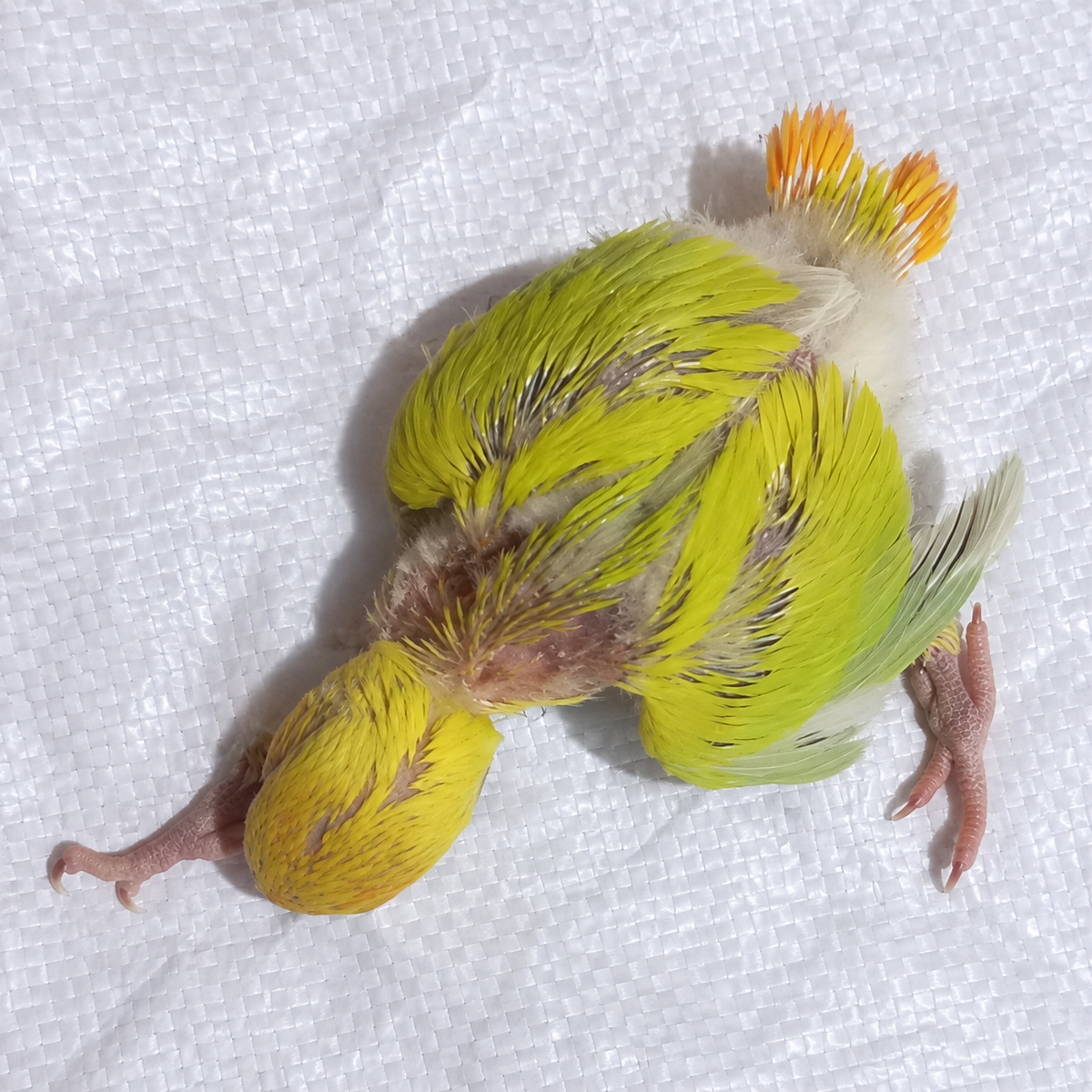
Peach-faced lovebird baby (21) – still hand feeding. The price is for the one individual shown. This chick is not weaned and is not yet eating independently. Its sex is unconfirmed; DNA sexing is available at our standard rates.
For experienced hand-rearers only. Contact us before ordering so we can discuss your experience, the chick’s current feeding routine, equipment and suitability for transport. If you have not safely hand-reared parrots before, choose an independently feeding juvenile lovebird instead. A video alone is not sufficient training. Never introduce an unweaned chick directly to an adult lovebird community.
Prepare your hand-rearing setup
Confirm the chick’s current formula and routine before purchase. DavianFeed PsitaFeed Baby hand-rearing formula is available; do not switch formulas abruptly. Accessories include the Baggy hand-rearing carrier, Airiel hand-rearing cage, stainless-steel feeding spoon and hand-feeding kit.
A carrier or small cage does not replace temperature-controlled brooding when a chick needs it. Ask your avian vet about suitable housing and hygienic, non-slip lining. Allspan wood shavings are available for suitable setups, but loose bedding must not be accessible to chicks that may swallow or inhale it; it is not our default recommendation for these unweaned babies. Feeding equipment must be suitable for the individual and used only with appropriate training.
Independent care resources
VCA Animal Hospitals: hand-feeding baby birds · Association of Avian Veterinarians: weaning baby parrots (PDF) · AAV educational video: caring for baby parrots and hand-feeding. These resources discuss baby parrots generally; they do not replace a demonstration, individual feeding plan or avian veterinary advice and are not an endorsement of our products.
Reservation, collection & transport
Reserve and pay in advance. Live Pets Transport is €7 per order across Malta, excluding Gozo and Comino, with same-day transport arranged with you after payment and subject to a suitable transport arrangement. Local pickup is also available by appointment. Live birds are not sent by standard parcel, Instant courier or international delivery. Suitable supplies in the same order may travel with the bird by arrangement.
Introducing your bird safely
Keep any new lovebird in its own suitable cage, ideally in a separate room, before introducing it to resident birds. Arrange an avian veterinary check and follow the vet’s quarantine advice; a period of around 30–45 days is commonly advised. Do not put a new juvenile straight into an established flock. After quarantine, make introductions gradually and supervise them. Explore cages for a separate setup.
Need help? Tap the WhatsApp button at the bottom right before ordering. We can help you prepare the right setup.
Care responsibilities & health information
Hand-rearing requires appropriate experience, equipment and ongoing observation. To the extent permitted by law, BirdsMalta.com is not responsible for injury, illness or death caused by incorrect feeding technique, unsuitable formula preparation or temperature, poor hygiene, inadequate housing or warmth, mishandling, or other failures of care after handover. We do not offer an additional guarantee of future health or lifespan. This does not exclude responsibility for our own breach of duty or negligence, or affect your statutory consumer rights. Concerns are assessed on their facts; seek prompt avian veterinary care if the bird is not feeding normally, loses weight, has breathing difficulties or becomes unusually quiet.
Photograph information: Colours may appear slightly different in person because of lighting when the photograph was taken and your screen’s resolution, brightness and display settings. Colour descriptions identify the pictured bird; they do not confirm a genetic mutation.
View Love Birds (Still Hand Feeding) · All Available Birds